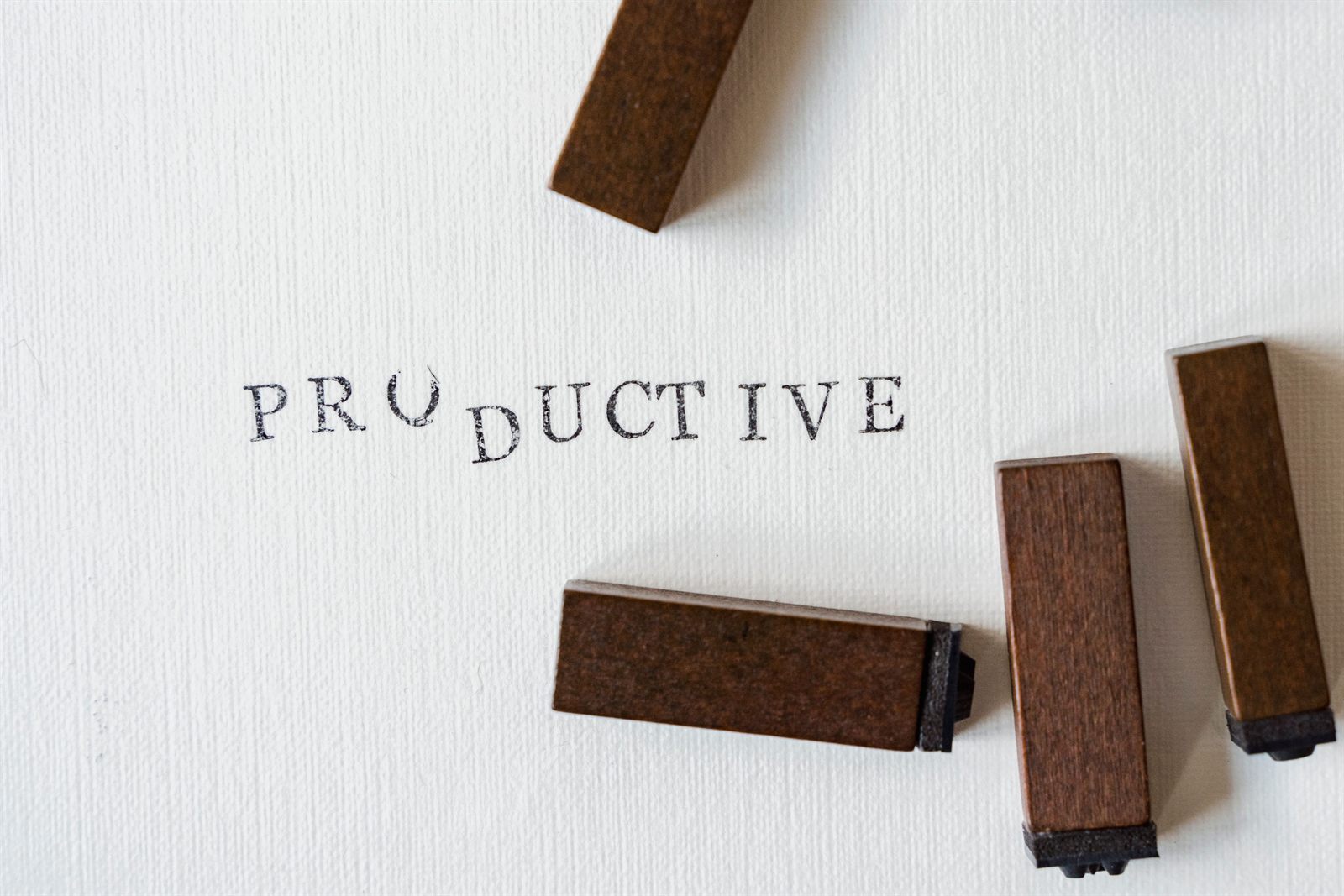
You are not unproductive because you are lazy. You are unproductive because you are doing several things that FEEL productive and are secretly working against you.
The cruel part is that most of them look like effort, so you never think to question them. You just assume you need to push harder, and push harder at the very things that are draining you. Let's name them, one by one, and most of them are backed by actual research, not just vibes.
One. Working longer and sleeping less
We treat exhaustion like a personality trait. Running on five hours, skipping lunch, calling it dedication. Here is the thing: it does not work, and we have known that for almost a hundred years. Back in 1926, Henry Ford ran an experiment on his own staff, dropping them from a ten hour day to eight, and from six days a week to five. Their productivity went UP. Not down. That is literally where the five day week came from.
More hours past a point does not mean more output, it means more tired, sloppier output. And the sleep part is the bit we are weirdly proud of ignoring. Research done with the US military found that losing just one hour of sleep a night for a week causes a level of mental impairment comparable to being legally drunk. You would never show up to work drunk, but we brag about pulling all-nighters. You are not getting more done by staying up. You are borrowing tomorrow's brain and quietly paying interest on it.
Honestly, half the famously productive people in history were dedicated nappers, Churchill among them. Rest is not the opposite of productivity. It is part of it.
And it is not just sleep. Construction industry research from decades ago found that once you push a work schedule past about 60 hours a week for more than two months, the cumulative drop in productivity gets so bad that the project finishes LATER than it would have with the same crew on a normal 40 hour week. Read that again. Working more actively made things slower. Your brain is not a machine you can simply run harder. Past a point, every extra hour you force out of it costs you two in quality, mistakes, and the grogginess you carry into the next day.
Two. Saying yes to everything
There is a principle called the Pareto principle, the 80/20 rule, that says roughly 80 percent of your results come from about 20 percent of your effort. Which means most of what fills your day is low-value busywork that you said yes to without thinking. Every yes to something small and pointless is a quiet no to something that actually matters, usually your own priorities.
You do not owe everyone instant access to your time. And here is a genuinely useful trick from the research: change your wording. In one study, people who said "I don't do that" stuck to their choice far more often than people who said "I can't do that." When researchers tested this with a tempting snack, the "I don't" group resisted nearly twice as often. "I can't" feels like deprivation and missing out. "I don't" feels like a decision you already made about who you are. So next time: not "I can't take that on right now," but "I don't take on extra work on weekends." Quietly powerful.
While we are here, there is a sister trick for the habits you keep saying yes to that you wish you would not, the doomscroll, the late-night online shop. It is called the 20-second rule: add about twenty seconds of friction between you and the thing. Log out of the app. Delete it off your phone so you have to go find it on your laptop. Move the snacks to the top shelf. We are far more driven by convenience than by willpower, so make the draining thing slightly annoying to reach and you will reach for it a lot less. And do the reverse for good habits: lay the thing out, leave it open, make starting it almost effortless.
Three. Trying to do every single thing yourself
Doing it all alone feels noble. It is mostly just slow. You burn out, the quality drops, and the stuff only you can actually do gets buried under stuff anyone could do. If something can be delegated, automated, bought, or simply dropped, it should not be eating your limited energy.
And even when no one can directly help, just having another human around works. There is a concept in ADHD support called the "body double," where having someone in the room, not even helping, just present, makes a boring or hard task far easier to start. This is why coworking, study-with-me videos, and doing your admin next to a friend genuinely work. You are not weak for needing it. You are using your brain the way it actually works.
Four. Chasing perfect
Perfectionism dresses up as high standards and behaves like procrastination wearing a nice outfit. A psychology professor, Dr. Simon Sherry, actually studied this in academics and found a clear pattern: the more perfectionistic someone was, the LESS they produced. Perfectionists spend too long on small things, wait for a "perfect moment" that never arrives, and miss the big picture while polishing a corner of it.
Done and out in the world beats perfect and trapped in your drafts every single time. The perfect moment is not coming. It is just now, slightly inconvenient, like it always is.
Done and out in the world beats perfect and trapped in your drafts, every single time.
Five. Doing repetitive things by hand forever
If you find yourself doing the exact same fiddly task over and over, that is a flag, not a fact of life. Templates, saved replies, batch scheduling, simple automations. You do not need to be technical. A decent rule: if you have done something more than about five times, ask whether it can be turned into a template or a system so future-you never has to think about it again. Time is the one thing you cannot earn back, so stop spending it on things a template could do.
Six. Guessing instead of glancing at a little data
You do not need to become a spreadsheet gremlin. But a tiny bit of self-knowledge beats guessing. For example, research found most people hit a natural slump and get most distracted between roughly noon and 4pm. If that is you, stop scheduling your hardest work into your worst window and wondering why it never gets done. Watch your own patterns for a week. When are you sharp, when are you useless, what actually drained you. Then build around the real you, not the fantasy one.
Seven. Never stopping to do nothing
This is the one we are most suspicious of. But constantly being "on" locks you in a tight little box where no new thinking can get in. Some solitude, some staring out a window, some walking with no podcast, is genuinely good for your brain. Most of us find the solution we were chasing the moment we stop chasing it, in the shower or on a walk. Doing nothing, on purpose, sometimes, is not a waste. It is maintenance.
A bonus one. Stop pretending you can multitask
You think you are doing three things at once. You are actually doing all three slightly worse and paying a hidden tax every time you switch between them. Psychologists call it switch cost, and it is real and measurable. Worse, every time you jump to check a message, part of your brain stays stuck on the thing you just left, what a researcher named Sophie Leroy called "attention residue."
So if your phone buzzes every few minutes, you are basically never fully present in anything all day. Do one thing fully, then the next. It is slower-feeling and faster-actually. Put the phone in another room. The twitchy discomfort fades quicker than you expect, I promise.
Being busy and being effective are not the same thing. Quite often, they are opposites.
The whole reframe, in one breath
Notice that not one of these is "try harder." They are all "stop doing the thing that feels like trying hard but quietly is not." That is the whole reframe. You do not need more grit. You need to subtract the stuff that is silently working against you.
So do not try to fix all seven this week, that is its own kind of overwhelm. Pick the ONE that stung the most as you read it (you already know which one) and just work on that for a week. One. Let the rest wait.
If you want a calmer system that protects your focus instead of shattering it into forty pieces, the Life Reboot Planner is built around doing less, better. Because the goal was never to cram more INTO your day. It was to get the things that actually matter OUT of it, finished, without leaving you fried. 🤍